
A short overview and a roadmap for the deep-dives coming over the next several weeks.

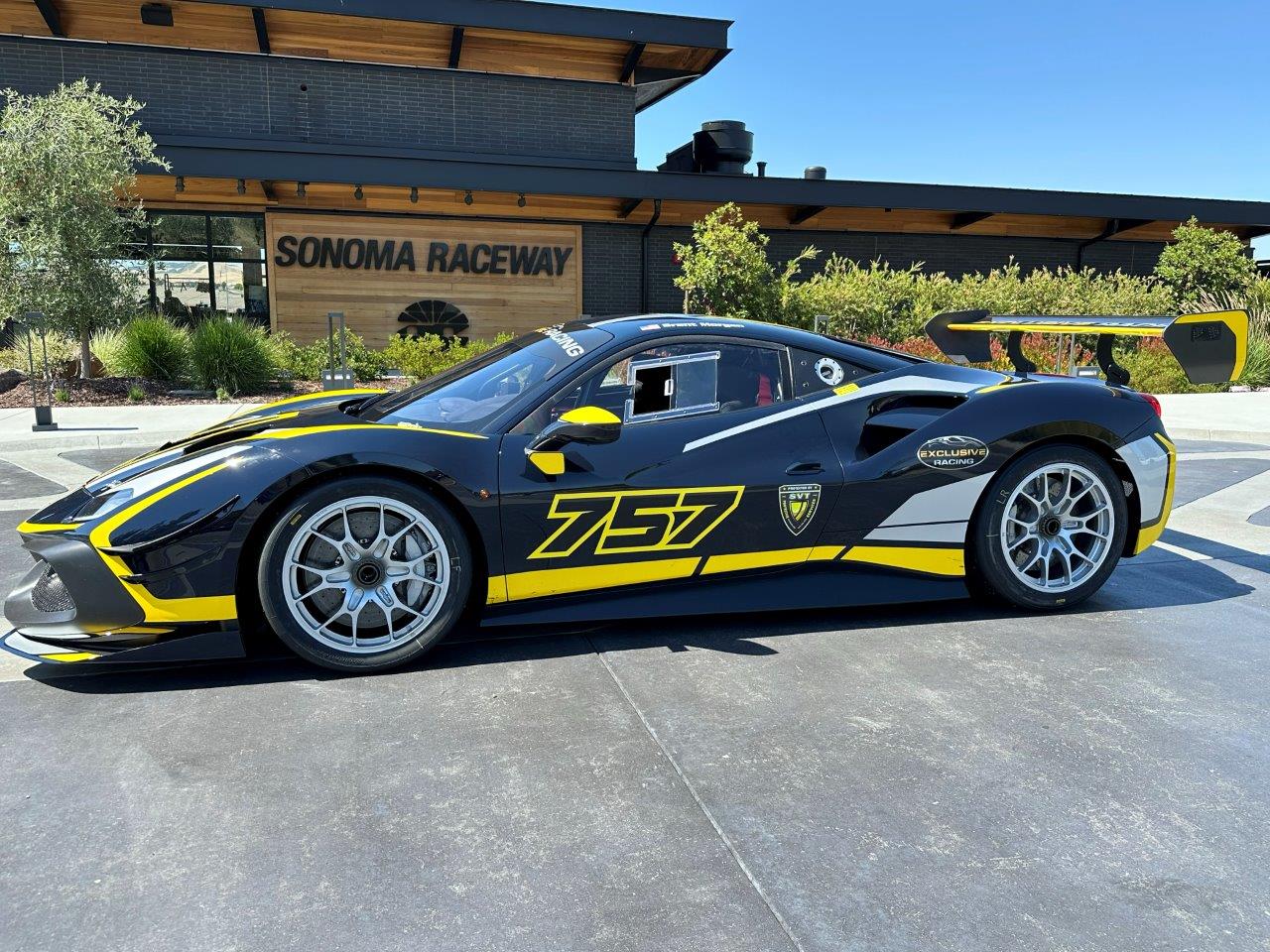
Exclusive Racing’s Ferrari 488 Challenge at Sonoma Raceway. Purpose-built, race-only, no plates, no CARFAX.

A Ferrari 296 GTS, street-legal and registered. Same prancing horse, completely different transaction.
Same brand. Same continent. Completely different conversation.
The Ferrari above left is a race car, a 488 EVO Challenge race car to be specific, built for one job and one job only. The Ferrari above right is a 296 GTS, a street-legal supercar, built to drive home from dinner on Saturday night. They look like cousins. They sell like strangers.
If you’ve only ever bought or sold passenger cars, the experience of buying or selling a race car can come as a surprise. The infrastructure most of us take for granted, CARFAX reports, Kelley Blue Book values, dealership inspections, clean titles in the mail all of it sits on top of a hundred years of regulation built around a single assumption: the car in question will be driven on a public road, by an insured private citizen, for personal transportation.
A race car is none of those things.
Here are six of the biggest ways a race-car transaction differs from a street-car one. Each of these gets its own deep-dive post over the coming weeks, a roadmap for everything you’ll want to know before you buy or sell a serious machine.
1. Most race cars don’t have a VIN, a title, or a CARFAX.
Race cars frequently sit outside the DMV / insurance / CARFAX ecosystem entirely. A purpose-built formula car, a tube-frame sports racer, or a stripped-and-caged production car may have no VIN at all, no title, and no service history that lives anywhere except its sanctioning-body logbook. Different paper does the work with logbooks, MSOs, build sheets, receipts, consignment agreements. Knowing what to ask for is half the battle.
2. “AS-IS, WHERE-IS” is the rule, not the exception.
Almost every legitimate race-car deal in the country closes on AS-IS, WHERE-IS terms. There’s no implied warranty and no return window. That’s not a gotcha, it’s the only honest way to sell a machine built to live at the limit. The safety nets in this market live somewhere different than they do in street-car deals: condition ratings, vetted listings, structured disclosure, and real race-car-aware PPIs.
3. Valuation isn’t a number — it’s a story.
There is no Kelley Blue Book for a Ligier JS F4 with three podiums and a fresh engine. Two physically identical cars can carry wildly different prices because one comes with a championship-winning logbook, a fresh data system, and a trailer full of spares and the other doesn’t. Selling well means telling that story clearly, with documentation. Buying well means knowing how to read it.
4. The pre-purchase inspection is a different animal.
A real race-car PPI isn’t happening at your local dealership. It requires inspectors who know the platform, chassis straightness after a season of curb-hopping, fuel cell service dates, wiring loom quality, fire system status, data system integrity, safety equipment compliance. Matching the right inspector to the right car is part of what a specialized marketplace does as a normal part of a deal.
5. Enclosed transport, specialized, and worth paying for.
Most race cars can’t be driven on public roads. They generally have no plates, no signals, sometimes no electrical system designed for street use. They need an enclosed trailer, proper tie-down points, and an operator who’s loaded a race car before. White-glove transport with race-car-aware drivers is part of the deal in this market, not a side errand to schedule yourself after the wire clears.
6. The deal closes on a different timeline.
A street-car sale can close in an afternoon. A race-car sale generally shouldn’t. At Exclusive Racing we use a 7-7-72 Timeline equating to roughly seven business days for inspection, seven business days for full payment, and seventy-two hours for asset and title release. That structure protects both sides of the deal and reflects how serious specialized transactions actually work.
What’s coming next
Over the next several weeks we’ll take each of these six topics and dig into what it actually means in practice, how smart buyers and sellers handle it, and how a specialized marketplace makes any of it work in the first place. After that, we’ll move into broader territory: setting a reserve, photographing a race car so it sells, selling a championship-winning machine, what international delivery actually looks like, and more.
Up first next week: Title, No Title, Logbook – What “Ownership” Actually Looks Like in a Race-Car Sale.
Subscribe to our newsletter or check back next week. In the meantime, if you have a car to sell, a car you’re looking for, or just questions about how this market works, reach out at: [email protected] or call us at 1.888.977.7885.
